Formulas may vary by 2-5%. Use the one that best matches your profile.
🍽️ Macronutrient Calculator
Select your goal to get personalized macro targets
Protein
150
24%
600 calories
Carbs
280
46%
1120 calories
Fats
82
30%
738 calories
⏰ Meal Timing & Distribution
Based on 4 meals per day
📊 Your TDEE Journey
📈
Total Entries
0
⚖️
Weight Change
–
🔥
Avg TDEE
–
📅
Tracking Since
–
📋 History Log
🎯 Set Your Goal
Define your target and let us calculate your personalized plan
Understanding TDEE (Total Daily Energy Expenditure)
💡 What is TDEE?
TDEE (Total Daily Energy Expenditure) represents the total number of calories your body burns in a 24-hour period.
It includes all energy expenditure from basic bodily functions (breathing, circulation), physical activity, exercise, and food digestion.
Understanding your TDEE is the foundation for effective weight loss,
muscle gain, or
maintaining a healthy weight.
🎯 Why TDEE Matters
Unlike BMR (Basal Metabolic Rate),
which measures only resting energy needs, TDEE accounts for your complete daily energy output. This makes it the most practical metric for
creating an effective nutrition plan,
whether your goal is fat loss, muscle building, or athletic performance optimization.
⚠️ Important Note
Your TDEE is not a static number—it changes based on your activity level, age, body composition, and even your
metabolic adaptation.
Regular recalculation and tracking are essential for continued progress toward your fitness goals.
The Four Components of TDEE
🔥 BMR (Basal Metabolic Rate) – 60-75%
BMR represents the calories your body burns at complete rest to maintain essential physiological functions like breathing, circulation, and temperature regulation.
It’s the largest component of TDEE and is influenced by age, gender, body weight, and
lean body mass.
🚶 NEAT (Non-Exercise Activity) – 15-30%
NEAT includes calories burned through daily activities that aren’t formal exercise—walking, taking stairs, fidgeting, household chores.
NEAT can vary dramatically between individuals and significantly impact total daily calorie expenditure.
Aim for 10,000+ steps daily and use a standing desk.
💪 EAT (Exercise Activity) – 5-15%
EAT represents calories burned during structured exercise sessions—running,
weightlifting,
cycling, or
HIIT workouts.
For athletes, this can represent 30-50% of TDEE.
🍽️ TEF (Thermic Effect of Food) – 8-15%
TEF is the energy required to digest, absorb, and process nutrients. Different macronutrients have varying thermic effects: protein (20-30%), carbohydrates (5-10%), fats (0-3%).
This is why high-protein diets can slightly boost metabolism.
Important: Most people overestimate their activity level. Be honest for accurate results.
Use our exercise calorie calculator for precise measurements.
How to Use TDEE for Your Goals
🔥 For Weight Loss
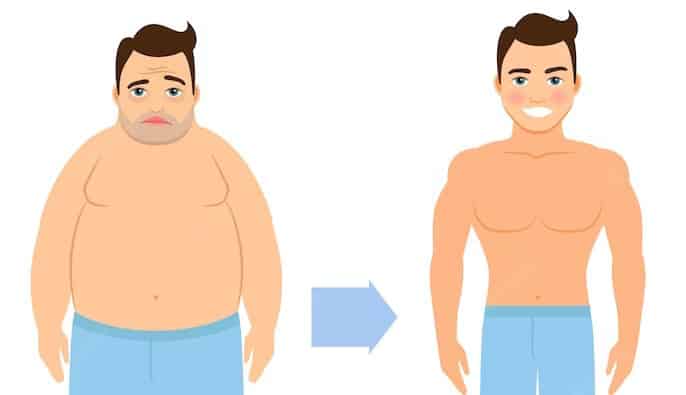
Create a 500-750 calorie deficit (TDEE – 500-750 = daily target). Expect 0.5-1 kg (1-2 lbs) loss per week.
Maintain high protein intake (2.0-2.2 g/kg) to preserve muscle.
Never go below 1,200 cal/day (women) or 1,500 cal/day (men).
Calculate your weight loss calories.
💪 For Muscle Gain
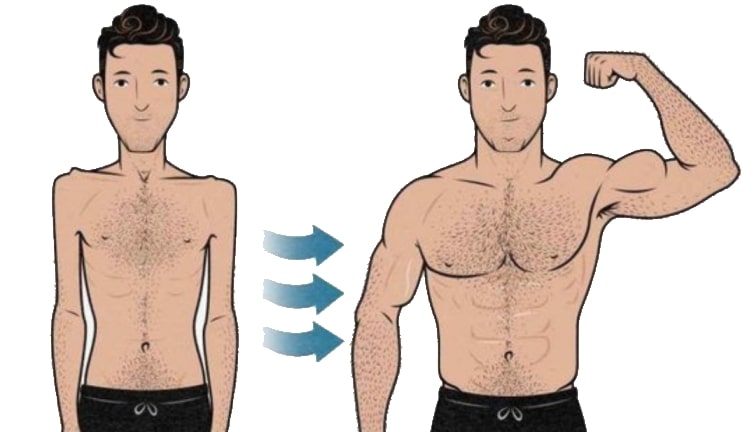
Create a 250-500 calorie surplus (TDEE + 250-500 = daily target). Expect 0.25-0.5 kg (0.5-1 lb) gain per week.
Consume 1.8-2.2 g/kg protein and follow a progressive overload program.
Natural lifters gain 0.25-0.5 kg muscle/month, so excessive surpluses lead to fat gain.
Plan your bulking calories.
⚖️ For Maintenance
Eat at your TDEE to maintain current weight. This is ideal for athletes during competition, taking diet breaks, or
body recomposition (losing fat while gaining muscle).
Track your BMI and body measurements regularly.
Macronutrient Distribution
🥩 Protein
Target: 1.6-2.6 g/kg body weight depending on goal Weight Loss: 2.0-2.4 g/kg (preserve muscle in deficit) Muscle Gain: 1.8-2.2 g/kg (support muscle protein synthesis) Maintenance: 1.6-2.0 g/kg (general health)
Top sources: Lean meats, fish, eggs, whey protein,
plant proteins.
🍞 Carbohydrates
Range: 40-60% of total calories Function: Primary fuel for high-intensity exercise and brain function
Higher carbs for athletes and high-volume training. Lower carbs (30-40%) for fat loss.
Use our carb calculator or
try keto approach (20-50g/day).
🥑 Fats
Range: 20-35% of total calories Minimum: Never below 0.3-0.4 g/kg (essential for hormones) Function: Hormone production, nutrient absorption, satiety
Prioritize unsaturated fats: olive oil, avocados, nuts, fatty fish.
Calculate optimal fat intake.
Common TDEE Mistakes
❌ Overestimating Activity Level
Three 1-hour gym sessions per week doesn’t make you “Very Active.” Most people should select “Lightly Active” or “Moderately Active.”
Overestimation leads to eating too much and unwanted fat gain.
❌ Not Recalculating as Weight Changes
Your TDEE decreases as you lose weight (smaller bodies need fewer calories). Recalculate every 5-10 lbs of weight loss or if progress stalls for 2-3 weeks.
Track with our weight loss tracker.
❌ Ignoring Metabolic Adaptation
After prolonged dieting, your metabolism adapts and burns fewer calories than predicted. Incorporate diet breaks, refeeds, or reverse dieting.
Our adaptive TDEE feature helps detect plateaus.
❌ Eating Back All Exercise Calories
Fitness trackers overestimate calorie burn by 20-30%. If using TDEE-based approach, exercise is already factored in—don’t add more calories on top.
Use specialized exercise calculators for accuracy.
Related Calculators
🔥 BMR Calculator
Calculate your Basal Metabolic Rate – the calories you burn at complete rest. Essential foundation for TDEE calculation.
Calculate BMR →
📊 BMI Calculator
Track your Body Mass Index with age/gender-adjusted ranges and percentiles. Includes body composition insights and progress tracking.
Calculate BMI →
🍽️ Macro Calculator
Get personalized protein, carbs, and fats targets with meal plans. Goal-based recommendations for optimal body composition.
Calculate Macros →
📐 Body Fat Calculator
Measure body fat percentage using calipers or Navy method. Essential for Katch-McArdle formula and body recomposition.
Calculate Body Fat →
💪 1RM Calculator
Calculate your one-rep max for major lifts. Track strength gains and program progression for optimal muscle building.
Calculate 1RM →
🏃 Exercise Calories
Accurately calculate calories burned during specific exercises. Over 50 activities with METs-based calculations.
Calculate Exercise Calories →
Scientific References
Mifflin MD, St Jeor ST, Hill LA, et al. A new predictive equation for resting energy expenditure in healthy individuals.Am J Clin Nutr. 1990;51(2):241-247. [PubMed]
Harris JA, Benedict FG. A Biometric Study of Human Basal Metabolism.Proc Natl Acad Sci U S A. 1918;4(12):370-373. [PMC]
McArdle WD, Katch FI, Katch VL. Exercise Physiology: Nutrition, Energy, and Human Performance. 8th ed. Lippincott Williams & Wilkins; 2014.
Jäger R, Kerksick CM, Campbell BI, et al. International Society of Sports Nutrition Position Stand: protein and exercise.J Int Soc Sports Nutr. 2017;14:20. [Full Text]
Trexler ET, Smith-Ryan AE, Norton LE. Metabolic adaptation to weight loss: implications for the athlete.J Int Soc Sports Nutr. 2014;11(1):7. [Full Text]
Aragon AA, Schoenfeld BJ, Wildman R, et al. International society of sports nutrition position stand: diets and body composition.J Int Soc Sports Nutr. 2017;14:16. [Full Text]
Note: All formulas and recommendations are based on peer-reviewed scientific research. Individual results may vary.
Consult healthcare providers before starting any diet or exercise program.
⭐ Mifflin-St Jeor Formula (Recommended)
For Men:
BMR = (10 × weight in kg) + (6.25 × height in cm) – (5 × age) + 5
For Women:
BMR = (10 × weight in kg) + (6.25 × height in cm) – (5 × age) – 161
Why Use It: The Mifflin-St Jeor equation is considered the most accurate for the general population, validated in multiple studies. It’s especially reliable for individuals with normal body composition.
📐 Harris-Benedict Formula (Revised 1984)
For Men:
BMR = 88.362 + (13.397 × weight in kg) + (4.799 × height in cm) – (5.677 × age)
For Women:
BMR = 447.593 + (9.247 × weight in kg) + (3.098 × height in cm) – (4.330 × age)
When to Use: The Harris-Benedict equation tends to estimate slightly higher than Mifflin-St Jeor. It’s suitable for individuals with higher activity levels or athletic backgrounds.
💪 Katch-McArdle Formula (Body Fat % Required)
BMR Formula:
BMR = 370 + (21.6 × lean body mass in kg)
Lean Body Mass:
LBM = weight in kg × (1 – body fat % / 100)
When to Use: The Katch-McArdle formula is most accurate for individuals who know their body fat percentage and have higher muscle mass (athletes, bodybuilders). It accounts for lean tissue, which is more metabolically active.
⚠️ Note: This formula requires an accurate body fat measurement. Use skinfold calipers, Navy method, or professional DEXA scan for best results.
🏃 Activity Level Multipliers
Activity Level
Multiplier
Description
Sedentary
1.2
Little or no exercise, desk job
Lightly Active
1.375
Light exercise 1-3 days/week
Moderately Active
1.55
Moderate exercise 3-5 days/week
Very Active
1.725
Hard exercise 6-7 days/week
Extra Active
1.9
Very hard exercise, physical job, or 2x training
Pro Tip: Most people overestimate their activity level. Be honest for accurate results. If unsure, start with a lower multiplier and adjust based on your progress tracking.
🎯 How to Use TDEE for Your Goals
Once you know your TDEE, you can manipulate your calorie intake to achieve specific body composition goals. The key is creating the right calorie deficit or surplus while maintaining adequate macronutrient intake.
🔥 For Weight Loss (Fat Loss)
Target: 500-750 calorie deficit per day
Expected Rate: 0.5-0.75 kg (1-1.5 lbs) per week Formula: TDEE – 500 to 750 calories = Daily target
Evidence-Based Guidelines:
Maintain high protein (1.8-2.2 g/kg body weight) to preserve muscle mass during deficit
Track progress weekly and adjust if weight loss stalls for 2-3 weeks
Consider a weekly refeed day (at maintenance calories) for aggressive deficits
⚠️ Minimum Calorie Warning: Never go below 1,200 calories/day for women or 1,500 calories/day for men without medical supervision. Extreme deficits can cause muscle loss, hormonal imbalances, and metabolic adaptation.
💪 For Muscle Gain (Bulking)
Target: 250-500 calorie surplus per day
Expected Rate: 0.25-0.5 kg (0.5-1 lb) per week Formula: TDEE + 250 to 500 calories = Daily target
Optimal Muscle Building Strategy:
Consume 1.8-2.2 g/kg protein daily for muscle protein synthesis
Get 8-10 hours sleep for optimal recovery and muscle growth
Time protein intake around workouts for enhanced recovery
💡 Lean Bulk Tip: Slower weight gain (0.25 kg/week) minimizes fat accumulation. Natural lifters can only gain 0.25-0.5 kg muscle per month, so excessive surpluses lead to unnecessary fat gain.
⚖️ For Weight Maintenance
Target: Eat at your TDEE
Expected Result: Stable body weight (±0.5 kg fluctuation) Formula: Daily intake = TDEE
Maintaining weight doesn’t mean stagnation. You can still improve body composition through training while eating at maintenance. This approach is ideal for:
Athletes during competition season
Taking a diet break after prolonged cutting phase
Beginners who can build muscle and lose fat simultaneously
Advanced lifters focusing on strength and performance
🎯 For Body Recomposition
Target: TDEE or slight deficit (-100 to -200 cal)
Expected Result: Lose fat while gaining muscle (slow progress) Best For: Beginners with high body fat or returning after layoff
Recomp Protocol:
Very high protein intake (2.0-2.4 g/kg) – crucial for recomp
Heavy resistance training 4-5x/week with progressive overload
Track body composition, not just scale weight (use measurements, photos, body fat %)
Be patient—recomp is slower than bulking or cutting phases
Consider calorie/carb cycling: higher on training days, lower on rest days
🍽️ Macronutrient Distribution Guide
While total calorie intake drives weight change, macronutrient distribution affects body composition, satiety, performance, and health. Our calculator provides goal-specific macro recommendations based on scientific research and practical experience.
Range: 40-60% of total calories Function: Primary fuel for high-intensity exercise, brain function, and muscle glycogen replenishment
Higher carbs for athletes and high-volume training. Lower carbs (30-40%) for fat loss or ketogenic approaches. Calculate with our carb calculator.
🥑 Dietary Fats
Range: 20-35% of total calories Function: Hormone production, nutrient absorption, satiety, and cellular health
Never go below 0.3-0.4 g/kg body weight—essential for hormonal health. Prioritize unsaturated fats: olive oil, avocados, nuts, fatty fish. Use our fat intake calculator.
⚠️ Common TDEE Mistakes to Avoid
❌ Overestimating Activity Level
Most people select “Very Active” when they should choose “Lightly Active” or “Moderately Active.” Three 1-hour gym sessions per week doesn’t make you “Very Active.” Be honest about your true activity level, or you’ll overeat and gain unwanted fat.
❌ Not Adjusting TDEE as Weight Changes
Your TDEE decreases as you lose weight (smaller bodies require fewer calories). Recalculate every 5-10 lbs of weight loss or if progress stalls for 2-3 weeks. Use our weight loss tracker.
❌ Ignoring Metabolic Adaptation
After prolonged dieting, your metabolism adapts, burning fewer calories than predicted. This is normal. Incorporate diet breaks, refeeds, or reverse dieting to maintain metabolic health. Our adaptive TDEE feature helps detect plateaus.
❌ Eating Back All Exercise Calories
Fitness trackers and machines often overestimate calorie burn by 20-30%. If using a TDEE-based approach, your exercise is already factored in—don’t add more calories on top. For accurate tracking, use our specialized exercise calorie calculators.
❌ Forgetting About Liquid Calories
Smoothies, juices, alcohol, coffee drinks, and protein shakes all count toward your TDEE. That “healthy” açai bowl can easily contain 600+ calories. Track everything you consume for accurate results.
❓ Frequently Asked Questions
Q: What’s the difference between BMR, RMR, and TDEE?
BMR is your metabolic rate while sleeping. RMR (Resting Metabolic Rate) is slightly higher, measured at rest but awake. TDEE is your total daily burn including all activity. For practical purposes, BMR and RMR are nearly identical (within 10%).
Q: How accurate are TDEE calculators?
TDEE calculators provide estimates within 10-15% accuracy for most people. Individual variations in metabolism, NEAT, and activity levels affect precision. Use the calculated TDEE as a starting point, then adjust based on real-world results over 2-4 weeks of consistent tracking.
Q: Should I eat the same calories every day?
You can use either a consistent daily intake (easier to track) or calorie/carb cycling (higher calories on training days, lower on rest days). Both approaches work if weekly averages match your goal. Cycling may provide slight advantages for body composition and adherence.
Q: How often should I recalculate my TDEE?
Recalculate every 5-10 lbs (2-5 kg) of weight change, when changing training intensity significantly, or if progress stalls for 2-3 consecutive weeks. Our progress tracking feature helps identify when adjustments are needed.
Q: Does meal timing affect TDEE?
Meal timing doesn’t significantly affect TDEE itself, but it influences performance, satiety, and body composition. Eating protein around workouts supports recovery. Intermittent fasting doesn’t boost metabolism but can help some people control calories better.
Q: Can I lose fat and gain muscle simultaneously?
Yes, but it’s challenging and slower than dedicated cutting or bulking phases. Beginners, those returning after a layoff, and individuals with higher body fat can achieve recomposition by eating at maintenance or slight deficit with very high protein (2.2-2.6 g/kg) and consistent strength training.
Q: What if I hit a weight loss plateau?
First, verify you’re accurately tracking all food intake. If confirmed, reduce calories by 100-200/day, increase NEAT (daily steps), or add a weekly refeed day at maintenance. Our adaptive TDEE system automatically detects plateaus and suggests adjustments based on your progress history.
Mifflin MD, St Jeor ST, Hill LA, et al. A new predictive equation for resting energy expenditure in healthy individuals.Am J Clin Nutr. 1990;51(2):241-247. doi:10.1093/ajcn/51.2.241 [PubMed]
Harris JA, Benedict FG. A Biometric Study of Human Basal Metabolism.Proc Natl Acad Sci U S A. 1918;4(12):370-373. doi:10.1073/pnas.4.12.370 [PMC]
McArdle WD, Katch FI, Katch VL. Exercise Physiology: Nutrition, Energy, and Human Performance. 8th ed. Lippincott Williams & Wilkins; 2014.
Trexler ET, Smith-Ryan AE, Norton LE. Metabolic adaptation to weight loss: implications for the athlete.J Int Soc Sports Nutr. 2014;11(1):7. doi:10.1186/1550-2783-11-7 [Full Text]
Jäger R, Kerksick CM, Campbell BI, et al. International Society of Sports Nutrition Position Stand: protein and exercise.J Int Soc Sports Nutr. 2017;14:20. doi:10.1186/s12970-017-0177-8 [Full Text]
Hall KD, Heymsfield SB, Kemnitz JW, et al. Energy balance and its components: implications for body weight regulation.Am J Clin Nutr. 2012;95(4):989-994. doi:10.3945/ajcn.112.036350 [PubMed]
Morton RW, Murphy KT, McKellar SR, et al. A systematic review, meta-analysis and meta-regression of the effect of protein supplementation on resistance training-induced gains in muscle mass and strength in healthy adults.Br J Sports Med. 2018;52(6):376-384. doi:10.1136/bjsports-2017-097608 [Full Text]
Aragon AA, Schoenfeld BJ, Wildman R, et al. International society of sports nutrition position stand: diets and body composition.J Int Soc Sports Nutr. 2017;14:16. doi:10.1186/s12970-017-0174-y [Full Text]
Note: All formulas and recommendations in this calculator are based on peer-reviewed scientific research and validated by fitness professionals. However, individual results may vary. Consult with healthcare providers before starting any diet or exercise program.